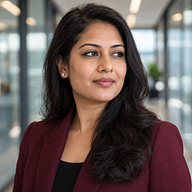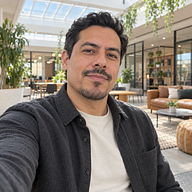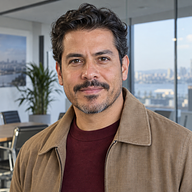
I replace week-long campaign reporting with automated dashboards that connect social publishing, email, and analytics, then write and localize conversion copy marketers can measure—a workflow I first refined for shops in my hometown of Gdansk.
Find a Freelancer
65 freelancers ready to help
Small manufacturers hire me to study how people use drawings and approvals, advise on the handoff problems I once managed in production, and design visual workshop interfaces that connect to planning systems; a ritual noon walk helps me untangle the day’s strangest workflow.
With credentials in systems analysis and operational risk, I build secure automations that connect commercial decisions, internal tools, and financial controls; every engagement begins with my ritual of mapping failure paths in red pencil.
Forty interviews, three performance bottlenecks, one redesigned workflow: I turn field evidence into fast, resilient technical systems. My work combines careful operator research, load testing, and pragmatic architecture; away from the bench, I restore vintage mechanical keyboards, which is excellent training in tiny causes with outsized effects.
Launching a community food brand’s visual content library taught me how reusable templates and clean reporting feeds keep posts consistent without dulling the writing; off-hours, I bind small notebooks by hand.
When financial teams drown in repetitive reports and sensitive drafts, I turn the numbers into plain-language guidance and build guarded workflows that keep reviews quick; my cat Pixel remains the strictest editor.
I turn vague social posts into tested campaigns by interviewing customers, reading comment patterns, and comparing creative variants, then tune the publishing calendar around results during my tram ride across Lisbon.
Dense financial reports lose decisions in the footnotes; I interview the people using them and turn findings, forecasts, and control notes into lucid board papers and investor materials, a discipline reinforced by drafting on my quiet morning commuter train.
Years spent designing controls and machine interfaces taught me where software meets physical tolerances. I now build monitoring services, automate equipment data collection, and connect engineering tools to maintenance and production systems. That work includes protocol mapping, resilient message handling, access controls, deployment scripts, and the unglamorous alert logic that prevents a small fault becoming a stopped line. I document ownership and recovery steps so plant teams can operate what I leave behind. A long bicycle commute is where I often untangle interface problems before opening a schematic. Clients get steady collaboration, candid risk calls, and integrations designed for the actual conditions on the floor.
Product teams preparing an assistant for real users bring me in to uncover where people mistrust its answers and where sensitive data might leak. I plan interviews, model misuse cases, test safeguards, and turn the findings into release decisions; restoring old radios keeps my patience sharp when a system sends mixed signals.
“We stopped rebuilding the same interface for every internal tool,” an engineering consultancy told me after I created its reusable web components and integrations for equipment schedules, technical schematics, and calculation data. Having founded a small software shop, I work fluently in Spanish and English with developers and building-systems engineers.
The project I still talk about began as a jumble of campaign drafts, customer notes, and disconnected model experiments. I turned it into a shared component library and a set of connected production flows, giving a small launch team one language from research through publication. Having founded and closed my own product studio, I know how expensive ambiguity becomes when people are moving fast. I now help teams shape reusable content patterns, connect generation and review tools, and keep editorial judgment visible inside the process. The work is equal parts structure and empathy: fewer one-off artifacts, stronger handoffs, and messages rooted in how customers actually speak. Before each workshop I make tea, silence every notification, and rewrite the central problem by hand. That small ritual keeps the conversation honest. Clients leave with a system they can extend after I am gone, not a clever demo that needs permanent supervision.